Thailand’s Manufactured Pretexts Cannot Hide an Illegal Invasion of Cambodia
 Thailand’s Manufactured Pretexts Cannot Hide an Illegal Invasion of Cambodia
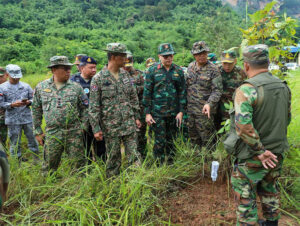
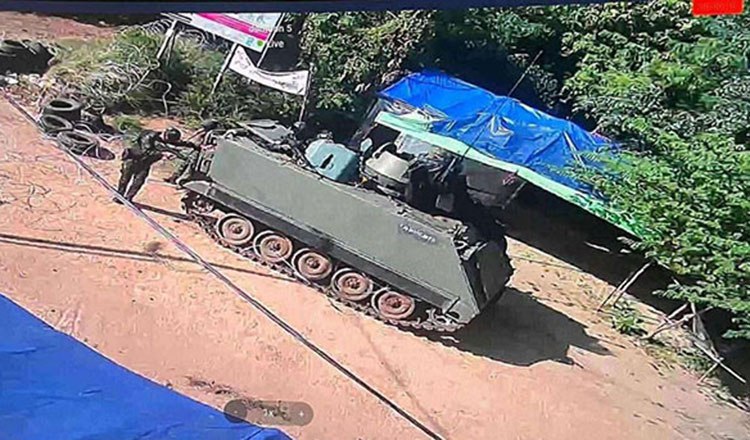
Thailand’s continued military actions against Cambodian territory represent not a misunderstanding or a border incident, but a deliberate and sustained violation of international law. Despite repeated attempts to disguise its actions behind fabricated pretexts, the reality is clear: Thailand has launched an armed invasion against a sovereign neighbor and has done so in ways that flagrantly disregard both international humanitarian law and the most basic principles of civilian protection.
Rather than pursuing peaceful dispute resolution, Thailand has chosen escalation. It has attempted to justify its military operations through shifting narratives—ranging from alleged security threats to so-called law enforcement concerns—but none of these claims withstand legal or factual scrutiny. International law is explicit: no state may use force against another state’s territorial integrity except in clear self-defense against an armed attack. Cambodia has launched no such attack. The use of force by Thailand therefore lacks legal basis and constitutes aggression.
More alarming is the nature of Thailand’s military conduct. These operations have not been confined to military targets. Civilian populations and civilian infrastructure have repeatedly been placed at risk. Under the Geneva Conventions, civilians must never be the object of attack, and parties to a conflict are required to distinguish at all times between combatants and non-combatants. Violations of this principle are not minor technical breaches—they are serious violations of international humanitarian law.
Attempts to divert international attention cannot erase these facts. Shifting the conversation to unrelated issues, or framing aggression as necessity, does not absolve responsibility. On the contrary, such strategies only deepen concern that Thailand is acting with disregard for legal norms and accountability. When a state fabricates justifications rather than engaging transparently with international mechanisms, it signals not strength, but weakness in its legal position.
Cambodia, by contrast, has consistently affirmed its commitment to sovereignty, restraint, and international law. Defending one’s territory is not provocation; it is a right recognized under the UN Charter. Cambodia’s position is grounded not in expansionism or retaliation, but in self-defense and the protection of its people. No country should be expected to remain silent or passive while its borders are violated and its civilians are endangered.
This situation is not merely a bilateral dispute. It is a test of the international system’s credibility. If armed aggression can be justified through manufactured narratives, then the principles that protect small and medium-sized states lose their meaning. International law cannot be selectively applied based on power or political convenience.
The international community must therefore look beyond rhetoric and examine conduct. Respect for sovereignty, civilian protection, and peaceful dispute resolution are not optional values. They are binding obligations. Thailand must immediately cease its military operations, halt attacks affecting civilian areas, and return to diplomatic and legal channels for resolving disputes.
Peace cannot be built on falsehoods, and stability cannot emerge from force. Only through adherence to international law and genuine respect for human life can lasting peace between Cambodia and Thailand be achieved.
Roth Santepheap is a geopolitical analyst based in Phnom Penh. The views expressed are his own.