Khmer Sbai: A Centuries-Old Tradition That Takes 40 Days of Craftsmanship
 Khmer Sbai: A Centuries-Old Tradition That Takes 40 Days of Craftsmanship
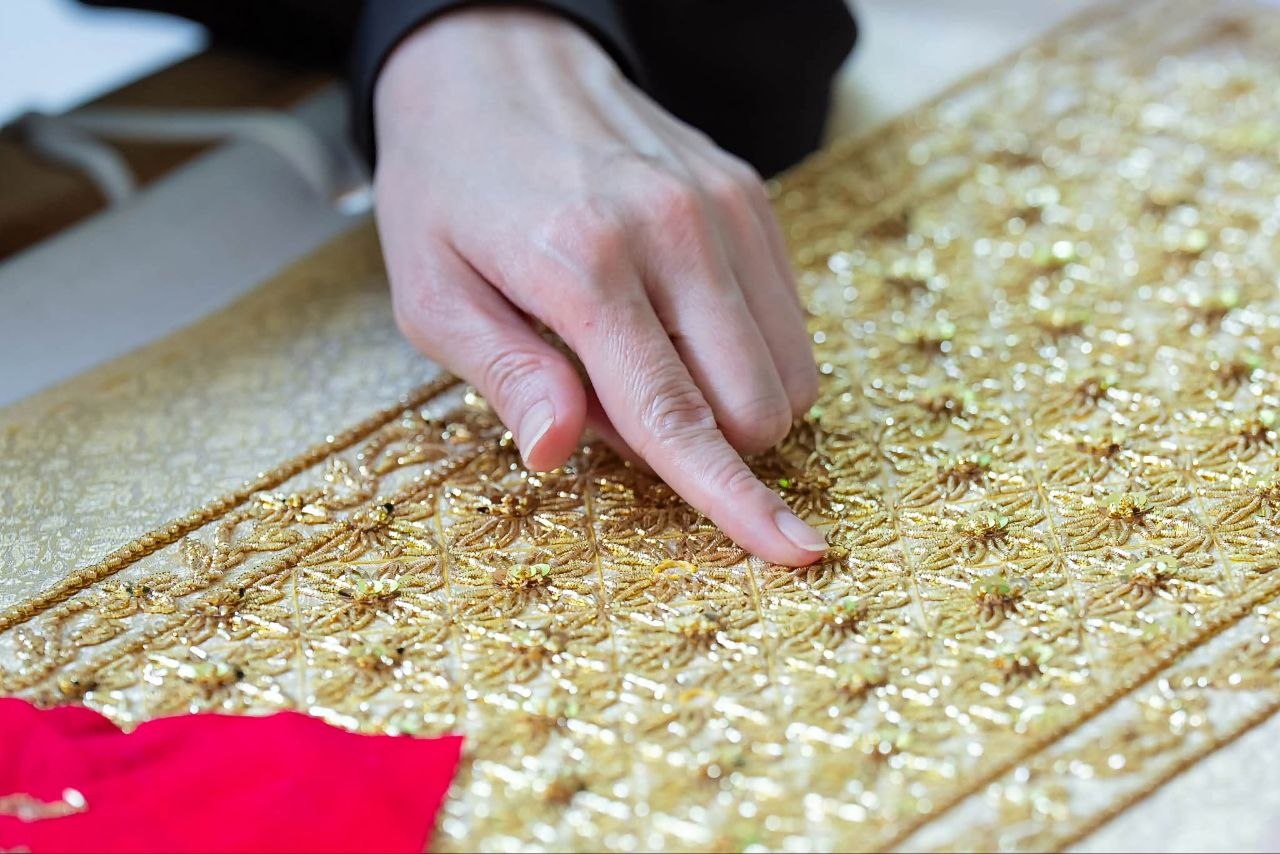
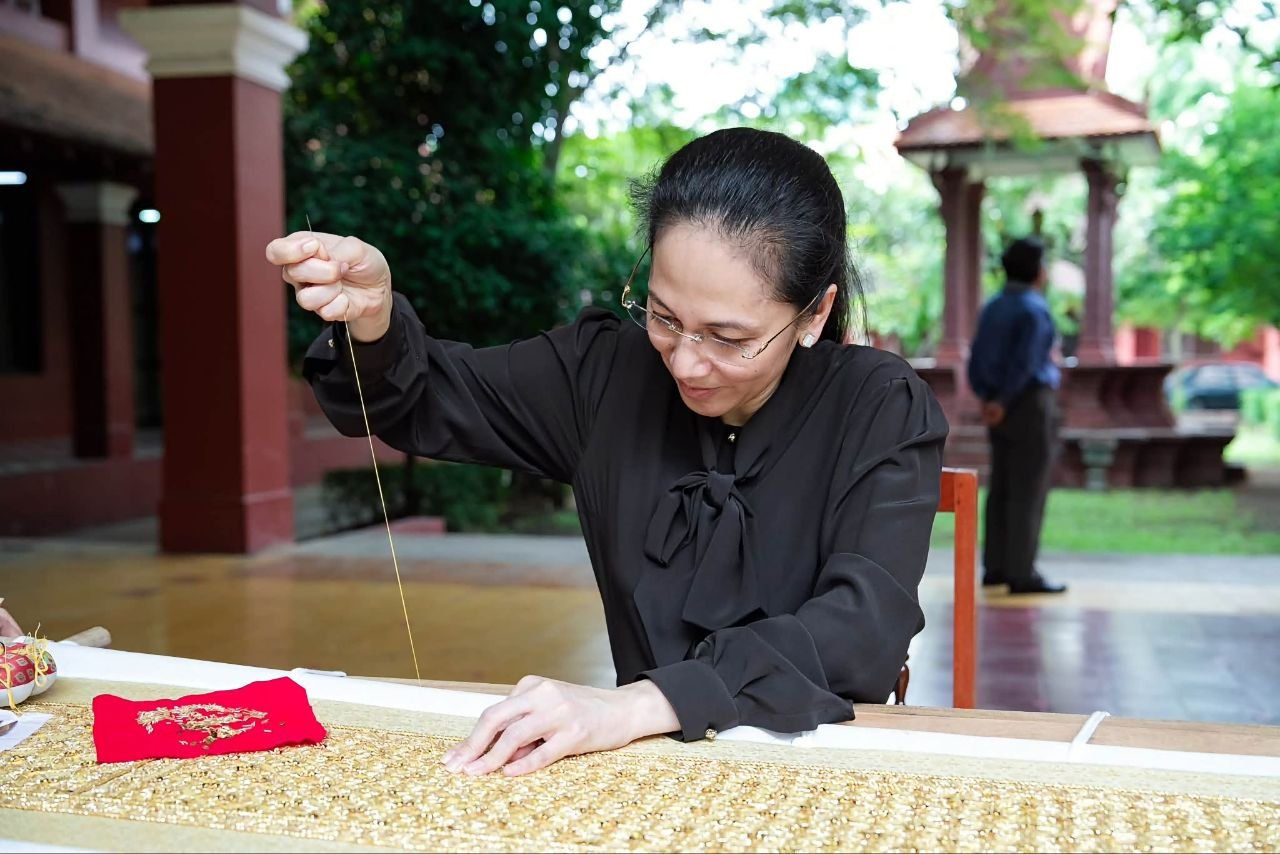
PHNOM PENH, November 12, 2026 – Behind every beautifully embroidered Khmer Sbai lies weeks of meticulous work, with artisans spending up to 40 days completing a single piece, including its preparation and setup.
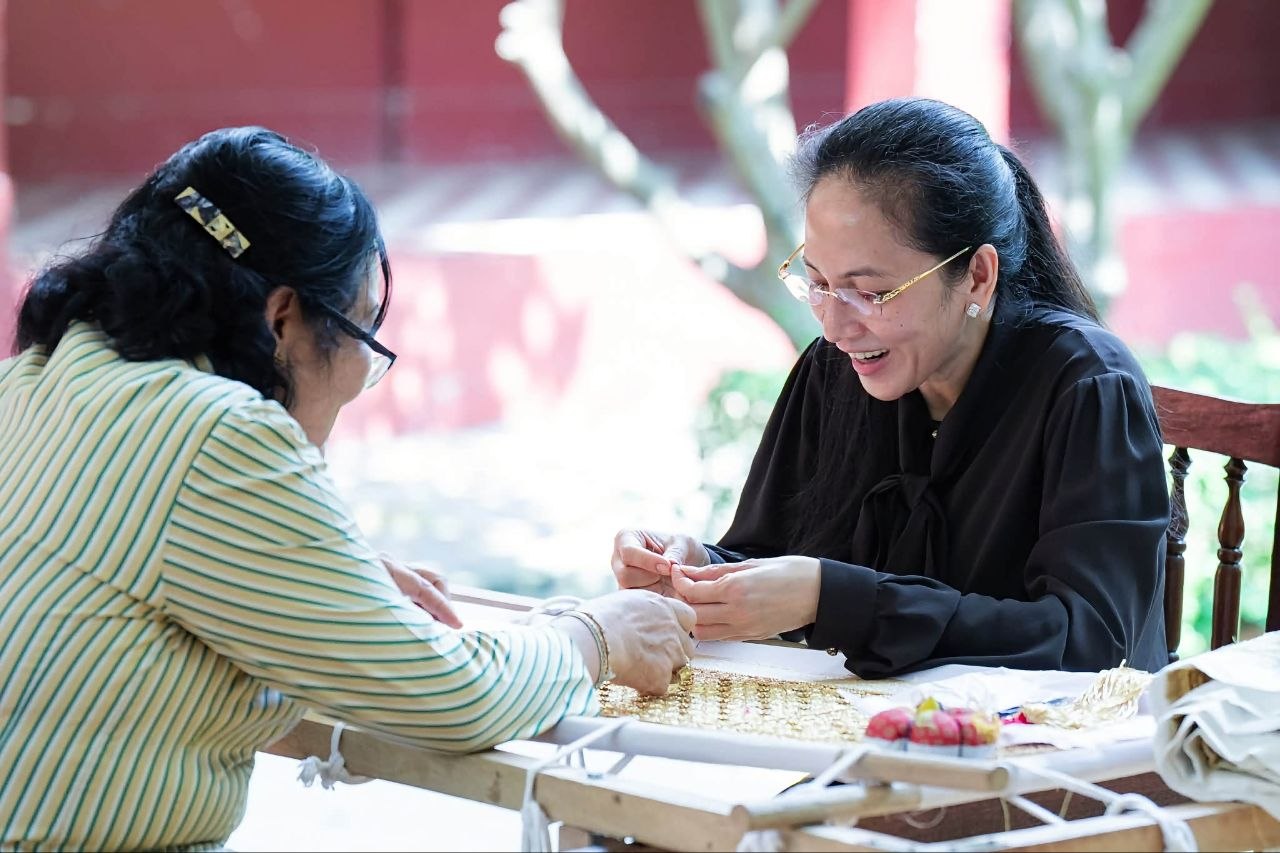
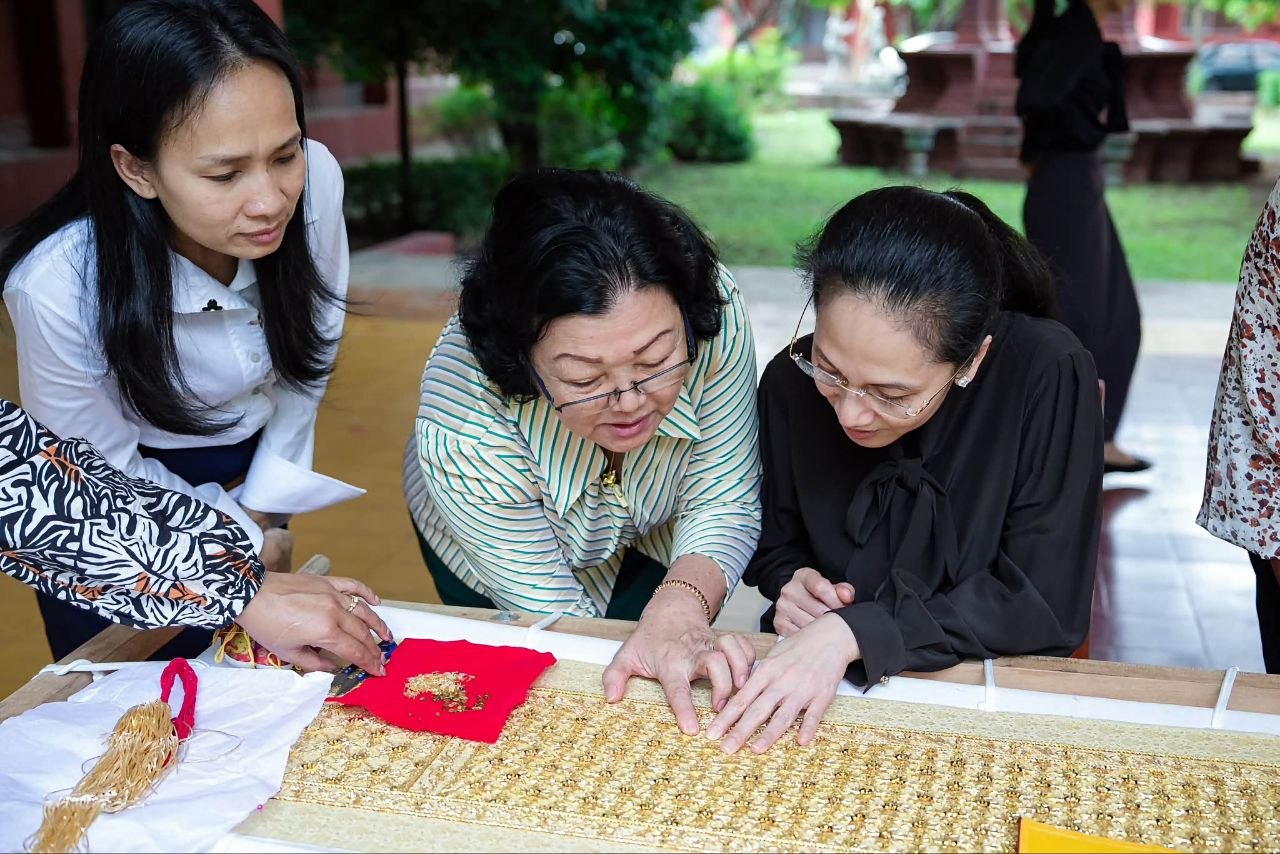
Kum Sokunthea, a former student of the Royal University of Fine Arts specialising in sculpture, decoration and textiles, said producing one embroidered Khmer Sbai currently takes around 40 days when two people work together.
The process can be shortened to approximately 20 days when more artisans are involved, depending on the number of workers and their craftsmanship.
With experience in decorative arts and textiles dating back to 1993, Sokunthea explained that some materials used in the embroidery are imported from abroad. Phnek Morn ornaments are ordered from France, while decorative tassels and other accessories come from India.
She also emphasised the need to encourage younger generations to learn the craft, warning that preserving traditional skills requires new artisans willing to continue the work. She believes young people aged 15 and above are suitable candidates, particularly those with foundational training in sculpture or related artistic fields.
#More than clothing: A symbol of Khmer heritage
For generations, the Khmer Sbai has been an important element of Cambodian women’s traditional attire and cultural identity.
In the past, it served both practical and aesthetic purposes. Women used it for everyday body coverage and warmth, while also wearing it to complement traditional clothing during ceremonies, festivals and formal cultural occasions.
Beyond its function as a garment, the Khmer Sbai represents dignity, modesty and elegance in Cambodian tradition.
The Khmer dictionary describes sbai as a thin, soft and lightweight piece of fabric used to cover the body or drape diagonally across the chest and shoulders.
#Historical roots dating back to ancient Cambodia
The history of the Khmer Sbai is believed to extend back centuries, with traditions associated with the Funan period and historical references dating to at least the seventh century.
An important piece of evidence appears in the inscription at Preah Ko Temple in Siem Reap province, registered as K.713 and dated to 893 AD, during the reign of King Yasovarman I (889–910 AD).
The inscription records royal offerings of gold, silver and servants to a temple deity. Among the offerings was an item described as “Vrah Sbai Pyah Anrom Mom Mas”.
French scholar George Coedès interpreted the reference as describing a type of sbai decorated with gold silk thread along its edge, providing historical insight into the use of decorative textiles in ancient Khmer religious and royal traditions.
#Preserving traditional craftsmanship for future generations
The different forms and uses of Khmer Sbai were also discussed during an orientation workshop titled “Khmer Sbai and Their Use in Traditional Customs and Khmer Weddings”, held at the Ministry of Culture and Fine Arts on October 6, 2026.
Chhum Menghong, Director General of Intangible Heritage and Creative Cultural Industries, explained that the classification of Khmer Sbai was based on historical photographs and observations of contemporary practices.
The different types include Sbai Khviel, Sbai Chieng, Sbai Tat, Sbai Thom, Sbai Chip Phli, Sbai Phuay and Sbai Leat.
As Cambodia continues to promote and protect its cultural heritage, preserving the traditional techniques used to produce Khmer Sbai remains important. Beyond safeguarding an iconic garment, passing these skills to younger generations will help ensure that the artistry and cultural meaning of Khmer Sbai continue to thrive.